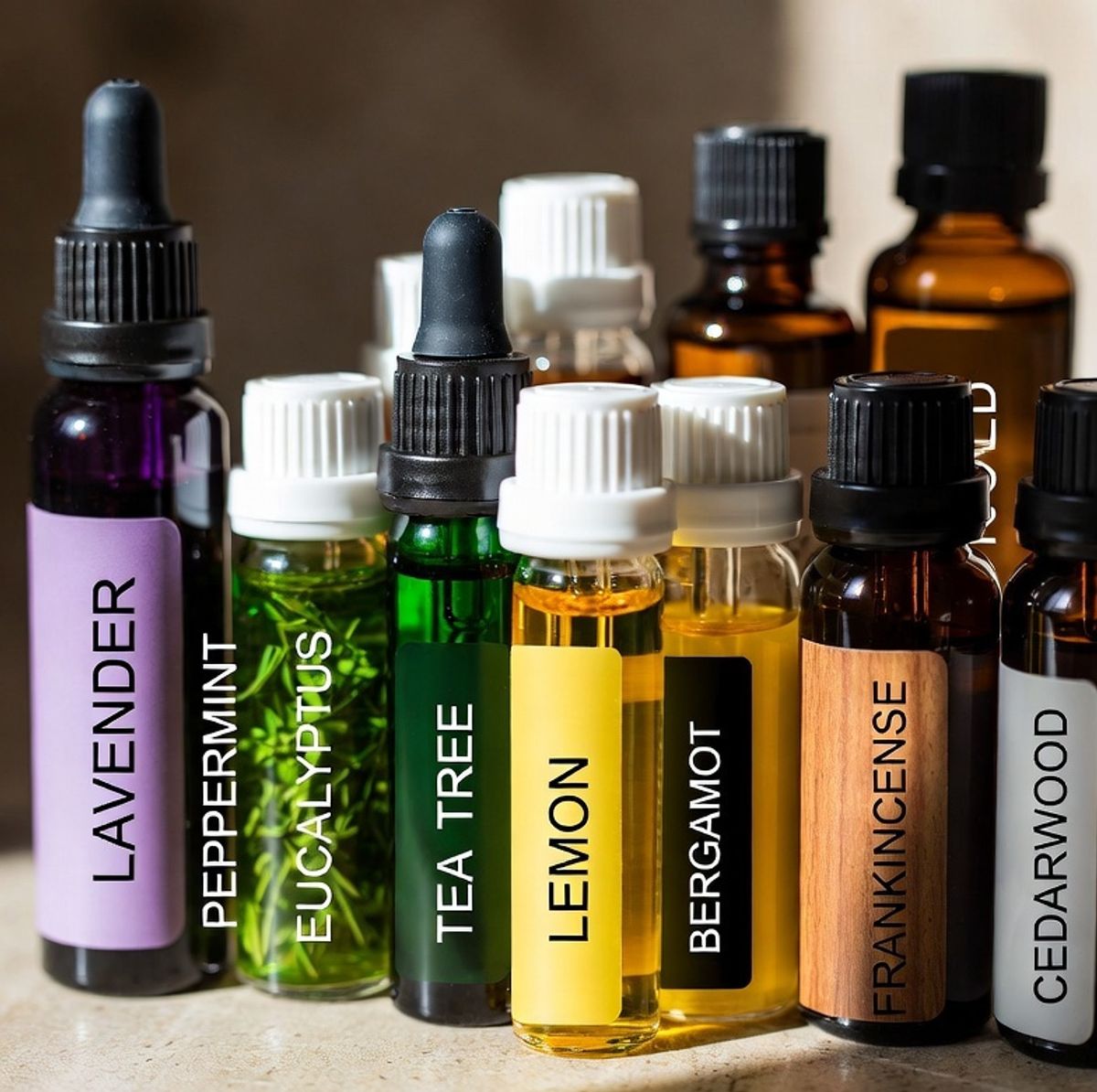
Top vs Base Notes: Building Better Blends with Essential Oils

Have you ever created an essential oil blend that smelled amazing at first, only to find it completely different an hour later? Or perhaps you've wondered why some professional blends seem to unfold in layers, revealing new dimensions over time? The secret lies in understanding essential oil notes—the foundation of masterful aromatherapy blending.
Just like a symphony has different instruments playing at various volumes and times, essential oils have different evaporation rates that create a complete aromatic experience. Understanding top vs base notes (and the often-overlooked middle notes) is the key to creating balanced, long-lasting blends that evolve beautifully over time.
Whether you're crafting a personal perfume, a diffuser blend for your home, or a therapeutic massage oil, mastering essential oil notes will transform your blending from guesswork into artistry. Let's explore how these aromatic layers work together to create something truly special.
Understanding Essential Oil Notes: The Basics
Essential oil notes refer to the rate at which an oil evaporates and how long its aroma lasts. This concept, borrowed from perfumery, divides essential oils into three categories based on their volatility—how quickly their molecules escape into the air.
Top Notes: The First Impression
Top notes are the lightest, most volatile essential oils. They evaporate quickly—typically within 30 minutes to 2 hours—and are the first scents you notice when opening a bottle or applying a blend. These oils are characterized by:
- Fresh, sharp, or bright aromas
- Small, light molecules that evaporate rapidly
- Uplifting and energizing properties
- High volatility
Common top note essential oils include:
- Citrus oils (lemon, orange, grapefruit, bergamot)
- Peppermint and spearmint
- Eucalyptus
- Tea tree
- Basil
Middle Notes: The Heart of Your Blend
Middle notes, also called heart notes, form the core of your blend. They emerge after the top notes begin to fade and typically last 2-4 hours. These oils provide:
- Rounded, warm, or floral aromas
- Balance between top and base notes
- The main therapeutic character of your blend
- Moderate evaporation rates
Popular middle note essential oils include:
- Lavender (Lavandula angustifolia)
- Geranium
- Chamomile
- Black pepper
- Rosemary
- Clary sage
Base Notes: The Foundation
Base notes are the heaviest, most grounding essential oils. They evaporate slowly—lasting anywhere from 4 to 24+ hours—and provide staying power to your blends. Base notes are characterized by:
- Rich, deep, earthy, or woody aromas
- Large, heavy molecules
- Grounding and calming properties
- Low volatility that "fixes" lighter oils
Essential base note oils include:
- Sandalwood
- Patchouli
- Vetiver
- Cedarwood
- Frankincense
- Myrrh
- Vanilla (absolute)
The Science Behind Evaporation Rates
Understanding why essential oils evaporate at different rates helps you make informed blending decisions. The key factor is molecular weight—the size and complexity of the aromatic molecules.
Molecular Weight and Volatility
Top note oils contain smaller, simpler molecules (lower molecular weight) that easily escape into the air. Think of them as lightweight sprinters—fast to react but quick to tire. Citrus oils like lemon contain compounds called monoterpenes (such as limonene) with molecular weights around 136 g/mol.
Base note oils contain larger, more complex molecules (higher molecular weight) that evaporate slowly. These are like marathon runners—slow and steady, providing endurance. Sandalwood's primary component, santalol, has a molecular weight around 220 g/mol, making it much heavier and slower to evaporate.
Middle notes fall somewhere in between, creating the perfect bridge between the fleeting top notes and the lingering base notes.
Temperature and Evaporation
Heat accelerates evaporation, which is why:
- Diffuser blends may smell different than roll-on perfumes
- Body heat affects how a blend develops on your skin
- Room temperature impacts how long a blend lasts in a diffuser
This is why professional perfumers and aromatherapists test blends on skin (with proper dilution) rather than just smelling from the bottle—the warmth of your body reveals how the blend truly evolves over time.
The Classic Blending Ratio: Creating Balance
The traditional perfumery ratio for creating balanced blends is approximately:
- 30% Top Notes - Initial impact and brightness
- 50% Middle Notes - Main character and body
- 20% Base Notes - Depth and longevity
However, this is a guideline, not a rigid rule. Depending on your goals, you might adjust these ratios:
For Energizing Blends: Increase top notes to 40-50%
- More citrus and mint oils
- Bright, uplifting character
- Example: Morning focus blend
For Calming Blends: Increase base notes to 30-40%
- More grounding woods and resins
- Long-lasting, meditative quality
- Example: Evening relaxation blend
For Balanced Daily Blends: Stick closer to the classic ratio
- Well-rounded aromatic experience
- Suitable for general wellness
- Example: All-day diffuser blend
Practical Blending Techniques for Beginners
Ready to create your own harmonious blends? Follow these step-by-step techniques to build confidence in your blending practice.
The Strip Test Method
Before committing oils to a bottle, use this simple testing technique:
- Take three scent strips (or coffee filters cut into strips)
- Place one drop of your chosen top note on one strip
- Add one drop of middle note on the second strip
- Add one drop of base note on the third strip
- Hold all three strips together and wave them under your nose
- Adjust ratios by adding more drops to individual strips until you find balance
This method lets you experiment without wasting precious oils and helps train your nose to recognize how notes work together.
The Bottle Blending Process
Once you've found a combination you love:
- Choose your carrier: For diffuser blends, no carrier needed. For topical use, select a carrier oil (jojoba, sweet almond, or fractionated coconut oil work well)
- Calculate drops: For a 10ml roller bottle at 2% dilution, you'll use about 6 drops total essential oil
- Add base notes first: Start with 1-2 drops (20% of your blend)
- Add middle notes: Include 3 drops (50% of your blend)
- Add top notes: Finish with 2 drops (30% of your blend)
- Fill with carrier oil: Leave a small space at the top
- Roll gently: Mix without shaking vigorously
- Let it age: Allow 24-48 hours for the oils to synergize before final evaluation
Safety Considerations
- Always dilute essential oils properly for topical use (2-3% for adults, 0.5-1% for children over 6)
- Perform a patch test before using new blends on skin
- Some top notes (especially citrus) are phototoxic—avoid sun exposure for 12-24 hours after topical application
- Pregnant women, children, and those with medical conditions should consult healthcare providers before use
- Never ingest essential oils without professional guidance
Five Foolproof Blend Recipes for Different Needs
Let these tried-and-true recipes inspire your blending journey. Each demonstrates how top, middle, and base notes work together to create specific therapeutic effects.
1. Morning Motivation Blend Energizing and uplifting
- 3 drops Grapefruit (top note) - bright, cheerful
- 2 drops Rosemary (middle note) - clarifying, focusing
- 1 drop Frankincense (base note) - grounding, centering
Purpose: Diffuse during morning routines or add to a 10ml roller bottle with carrier oil for pulse point application. The grapefruit provides immediate uplift, rosemary enhances mental clarity, and frankincense keeps you grounded and focused.
2. Stress Relief Sanctuary Calming and balancing
- 2 drops Bergamot (top note) - anxiety-reducing, mood-lifting
- 3 drops Lavender (middle note) - relaxing, harmonizing
- 2 drops Sandalwood (base note) - deeply calming, meditative
Purpose: Perfect for evening diffusion or in a bedtime roller blend. The bergamot immediately eases tension, lavender soothes the nervous system, and sandalwood provides lasting tranquility.
3. Immune Support Shield Protective and purifying
- 2 drops Lemon (top note) - cleansing, purifying
- 2 drops Tea Tree (top/middle note) - antimicrobial, protective
- 1 drop Eucalyptus (top note) - respiratory support
- 1 drop Cedarwood (base note) - grounding, supportive
Purpose: Diffuse during cold and flu season or create a chest rub (properly diluted at 2%). The citrus and eucalyptus notes provide immediate freshness while cedarwood adds staying power.
4. Romantic Evening Blend Sensual and warming
- 2 drops Orange (top note) - sweet, inviting
- 3 drops Ylang Ylang (middle note) - floral, aphrodisiac
- 2 drops Patchouli (base note) - earthy, sensual
Purpose: Diffuse in the bedroom or create a massage oil blend. Orange provides initial sweetness, ylang ylang offers exotic floral notes, and patchouli adds depth and sensuality that lingers.
5. Mental Clarity Focus Concentration and alertness
- 3 drops Peppermint (top note) - stimulating, awakening
- 2 drops Basil (top/middle note) - clarifying, sharpening
- 1 drop Vetiver (base note) - grounding, stabilizing
Purpose: Ideal for study sessions or work environments. Peppermint jumpstarts alertness, basil enhances cognitive function, and vetiver prevents mental overwhelm by providing an earthy anchor.
Advanced Blending: Taking Your Skills Further
Once you've mastered basic note blending, explore these advanced concepts to refine your aromatherapy artistry.
Synergy and Chemotypes
Not all essential oils of the same species are created equal. Chemotypes are variations of the same plant that produce different chemical compositions based on growing conditions. For example:
- Rosemary ct. cineole (camphoraceous, respiratory support)
- Rosemary ct. camphor (stimulating, muscular support)
- Rosemary ct. verbenone (gentle, skin-friendly)
Understanding chemotypes helps you select oils with specific therapeutic properties that work synergistically in your blends.
Aromatic Families
Essential oils can also be categorized by aromatic families, which tend to blend well together:
- Citrus: Lemon, orange, bergamot, grapefruit
- Floral: Lavender, geranium, ylang ylang, rose
- Herbaceous: Rosemary, basil, clary sage, marjoram
- Woody: Cedarwood, sandalwood, pine, cypress
- Earthy: Patchouli, vetiver, oakmoss
- Spicy: Black pepper, ginger, cinnamon, clove
- Resinous: Frankincense, myrrh, benzoin
Oils from the same family naturally harmonize, while combining oils from complementary families (like citrus and woody, or floral and earthy) creates interesting contrasts.
The Perfumer's Pyramid
Professional perfumers visualize blends as a pyramid:
- The narrow top represents fleeting top notes
- The wide middle section represents the dominant heart notes
- The solid base represents the foundational base notes
This visual helps you understand that while top notes make the first impression, the middle notes carry the most aromatic weight, supported by the grounding base notes.
Blending for Therapeutic Goals
When creating therapeutic blends, consider both aromatic harmony and therapeutic synergy:
- For sleep: Emphasize sedative middle and base notes (lavender, vetiver, sandalwood)
- For pain relief: Combine anti-inflammatory oils across all note categories (peppermint, lavender, frankincense)
- For mood elevation: Feature uplifting top and middle notes (citrus oils, geranium, ylang ylang)
- For respiratory support: Focus on expectorant top and middle notes (eucalyptus, rosemary, tea tree)
Common Blending Mistakes and How to Avoid Them
Even experienced aromatherapists make these errors. Learn from them to accelerate your blending mastery.
Mistake #1: Using Too Many Oils
Beginners often think more is better, creating blends with 8-10 different oils. This usually results in muddy, confused aromas where no single note shines.
Solution: Start with 3-4 oils maximum. Master simple blends before adding complexity. Remember: simplicity often creates the most elegant results.
Mistake #2: Ignoring Quality Differences
Not all essential oils are created equal. A synthetic or adulterated oil will throw off your entire blend, regardless of proper note balancing.
Solution: Invest in high-quality, pure essential oils from reputable suppliers. Look for GC/MS testing reports and botanical names on labels.
Mistake #3: Not Allowing Blends to Age
Essential oils need time to synergize—their molecules interact and create new aromatic compounds through a process called "marrying."
Solution: After creating a blend, let it rest for 24-48 hours before final evaluation. Many blends improve significantly after aging, with some reaching peak harmony after a week.
Mistake #4: Forgetting About Skin Sensitivity
Some beautiful-smelling combinations may be irritating when applied topically, especially if they're heavy in top note oils like citrus or cinnamon.
Solution: Always dilute properly (2-3% for adults), perform patch tests, and research individual oil safety profiles before topical application.
Mistake #5: Neglecting Personal Preference
Following ratios religiously without considering your own nose and therapeutic goals creates technically correct but personally unsatisfying blends.
Solution: Use guidelines as starting points, then adjust to your preferences. If you love base notes, increase them. Trust your nose—it knows what you need.
Seasonal Blending: Adapting Notes Throughout the Year
The changing seasons naturally call for different aromatic profiles. Here's how to adjust your note balance seasonally.
Spring Blends: Fresh and Renewing
- Increase top notes (40-50%)
- Feature fresh, green, and floral oils
- Example: Grapefruit, geranium, cypress
Summer Blends: Light and Cooling
- Emphasize bright top notes
- Include cooling middle notes like peppermint
- Keep base notes minimal (10-15%)
- Example: Lemon, lavender, spearmint, hint of sandalwood
Fall Blends: Warm and Grounding
- Balance all three note categories evenly
- Include spicy middle notes
- Example: Orange, cinnamon leaf, frankincense
Winter Blends: Rich and Comforting
- Increase base notes (30-40%)
- Feature warming, resinous oils
- Example: Bergamot, clary sage, cedarwood, vanilla
Building Your Blending Toolkit
To develop your skills with essential oil notes, assemble a well-rounded collection that covers all three note categories.
Essential Starter Oils (12 oils covering all notes)
Top Notes:
- Lemon (Citrus limon)
- Peppermint (Mentha piperita)
- Eucalyptus (Eucalyptus globulus)
- Bergamot (Citrus bergamia)
Middle Notes:
- Lavender (Lavandula angustifolia)
- Geranium (Pelargonium graveolens)
- Rosemary (Rosmarinus officinalis)
- Chamomile (Matricaria chamomilla or Chamaemelum nobile)
Base Notes:
- Frankincense (Boswellia carterii)
- Cedarwood (Cedrus atlantica)
- Patchouli (Pogostemon cablin)
- Sandalwood (Santalum album or Santalum spicatum)
Blending Supplies:
- Small glass bottles (5ml or 10ml amber or cobalt blue)
- Roller bottles for personal blends
- Pipettes or droppers for precise measuring
- Scent strips for testing
- Labels for recording your recipes
- Carrier oils (jojoba, sweet almond, or fractionated coconut oil)
- Notebook for tracking your experiments
Conclusion
Understanding top vs base notes transforms essential oil blending from random experimentation into intentional artistry. By recognizing how evaporation rates affect aromatic development, you can create balanced blends that unfold beautifully over time, delivering both immediate impact and lasting benefits.
Remember these key principles:
- Top notes provide the first impression with bright, uplifting aromas
- Middle notes form the heart of your blend with rounded, balancing qualities
- Base notes give depth and longevity with rich, grounding characteristics
- The classic 30-50-20 ratio is a starting point, not a rigid rule
- Quality oils, proper dilution, and patience are essential for success
Start simple with three-oil blends, practice the strip test method, and keep detailed notes about what works. Your nose will become more educated with each blend you create, and soon you'll intuitively know which oils complement each other.
Ready to start blending? Choose one recipe from this guide, gather your oils, and experience the magic of layered aromatics. Share your favorite combinations in the comments below, and explore our related articles on specific essential oils to deepen your blending knowledge.
Your aromatic journey begins with a single drop—make it a harmonious one.

About Info
Scentsay Info