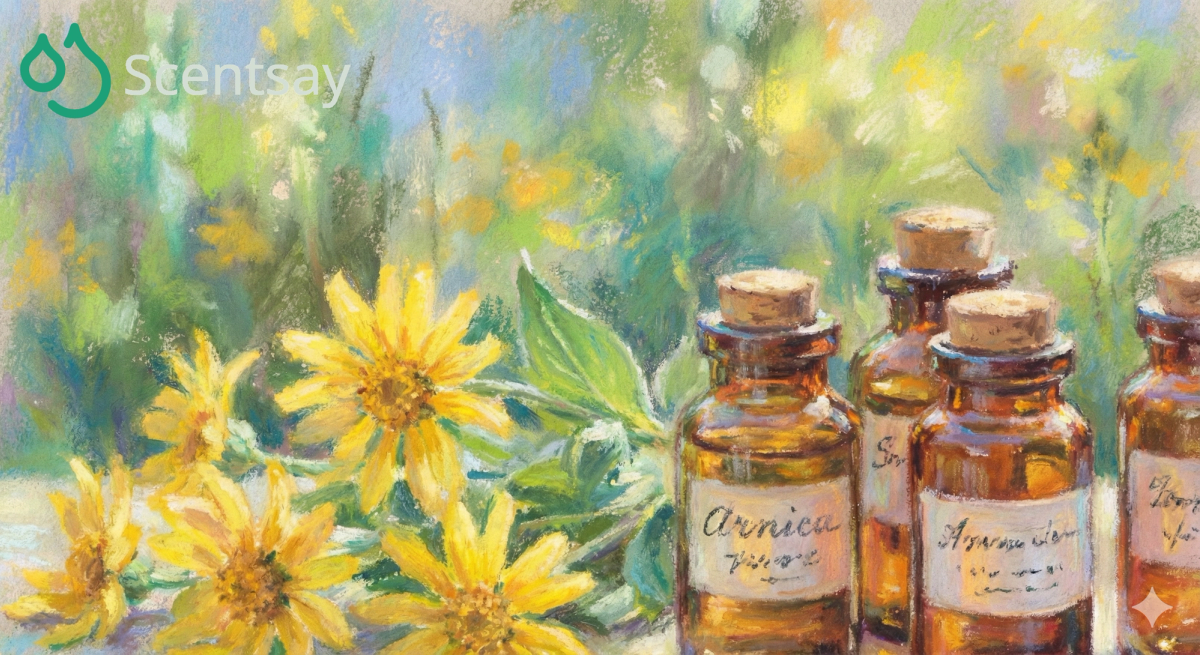
Arnica Blends & Recipes: Natural Relief for Sore Muscles & Pain

If you've ever reached for a natural solution after an intense workout, a minor injury, or persistent muscle aches, you've likely encountered arnica. This remarkable botanical has been a cornerstone of natural medicine for centuries, prized for its ability to soothe sore muscles, reduce bruising, and ease inflammation. While arnica (Arnica montana) isn't typically available as an essential oil due to its toxic nature when concentrated, arnica-infused carrier oils and carefully crafted blends with complementary essential oils create powerful formulations for topical pain relief.
In this comprehensive guide, we'll explore the science behind arnica's therapeutic properties, share expert-formulated arnica blends, and provide you with practical DIY recipes you can create at home. Whether you're an athlete seeking recovery support, someone managing chronic discomfort, or simply looking for natural alternatives to conventional pain relief, these arnica-based formulations offer gentle yet effective solutions.
Understanding Arnica: The Foundation of Effective Blends
Before diving into recipes, it's essential to understand what makes arnica such a valuable ingredient in natural pain management.
What is Arnica?
Arnica montana, also known as mountain tobacco or leopard's bane, is a perennial herb native to the mountains of Europe and Siberia. The bright yellow, daisy-like flowers contain powerful compounds including:
- Sesquiterpene lactones (helenalin and dihydrohelenalin): Anti-inflammatory agents that inhibit the activation of transcription factor NF-κB
- Flavonoids: Antioxidants that support tissue repair
- Thymol derivatives: Compounds with antimicrobial properties
- Carotenoids: Plant pigments with protective benefits
Why Arnica-Infused Oil Instead of Essential Oil?
Pure arnica essential oil is extremely rare and potentially toxic for topical use. Instead, aromatherapists and herbalists use arnica-infused carrier oils (also called macerated oils), where dried arnica flowers are steeped in a carrier oil to extract their beneficial compounds. This creates a safe, effective base for topical applications.
Therapeutic Benefits of Arnica Blends:
- Reduces inflammation and swelling
- Minimizes bruising and discoloration
- Alleviates muscle soreness and stiffness
- Supports post-exercise recovery
- Eases joint discomfort
- Promotes healing of minor injuries
Essential Oils That Complement Arnica Perfectly
Creating effective arnica blends means pairing arnica-infused oil with essential oils that enhance its pain-relieving and anti-inflammatory properties. Here are the most synergistic combinations:
Top Essential Oils for Arnica Blends:
- Peppermint (Mentha piperita): Provides cooling relief through menthol, blocks pain signals, and improves circulation
- Lavender (Lavandula angustifolia): Offers anti-inflammatory benefits, reduces pain perception, and promotes relaxation
- Eucalyptus (Eucalyptus globulus): Contains 1,8-cineole for deep-penetrating relief and reduced inflammation
- Wintergreen (Gaultheria procumbens): Rich in methyl salicylate (natural aspirin-like compound) for powerful pain relief
- Helichrysum (Helichrysum italicum): Exceptional for bruising, tissue regeneration, and reducing inflammation
- Rosemary (Rosmarinus officinalis): Stimulates circulation, relieves muscle tension, and supports recovery
- German Chamomile (Matricaria chamomilla): Contains chamazulene for potent anti-inflammatory action
- Marjoram (Origanum majorana): Relaxes tense muscles and provides warming comfort
- Ginger (Zingiber officinale): Warming oil that increases blood flow and reduces stiffness
- Black Pepper (Piper nigrum): Enhances absorption of other compounds and provides warming relief
Safety Considerations for Arnica Blends
While arnica-based formulations are generally safe for external use, following proper guidelines ensures optimal results without adverse effects.
Important Safety Guidelines:
- Never apply to broken skin: Arnica is for intact skin only. Avoid open wounds, cuts, or abraded areas
- Never ingest: Arnica is toxic when taken internally
- Patch test first: Apply a small amount to your inner forearm and wait 24 hours to check for sensitivity
- Proper dilution: Keep essential oil concentration at 2-3% for regular use, up to 5% for acute situations (short-term only)
- Avoid sensitive areas: Keep away from eyes, mucous membranes, and genital areas
- Pregnancy and nursing: Consult healthcare provider before use
- Children: Use lower dilutions (0.5-1%) for children over 2 years; avoid for infants
- Allergies: Those allergic to Asteraceae family plants (ragweed, daisies, marigolds) may react to arnica
Contraindications:
- Allergy to Asteraceae family
- Broken or damaged skin
- Pregnancy (first trimester especially)
- Long-term continuous use (take breaks to prevent sensitization)
Expert-Formulated Arnica Blends for Specific Needs
Now let's explore professional-grade arnica blends designed for various therapeutic applications. Each recipe includes precise measurements, application instructions, and usage tips.
1. Post-Workout Recovery Massage Oil
This blend combines arnica's anti-inflammatory properties with circulation-boosting essential oils to speed muscle recovery and reduce soreness.
Ingredients:
- 2 oz (60 ml) arnica-infused oil
- 12 drops peppermint essential oil
- 10 drops lavender essential oil
- 8 drops eucalyptus essential oil
- 6 drops rosemary essential oil
Dilution rate: 3% (36 drops total in 60 ml)
Instructions:
- Combine arnica-infused oil and essential oils in a dark glass bottle
- Shake gently to blend
- Label with date and contents
Application: Massage into sore muscles within 2 hours post-exercise. Use long, flowing strokes toward the heart to encourage lymphatic drainage. Apply 2-3 times daily as needed.
Best for: Athletes, fitness enthusiasts, physical laborers
2. Bruise-Minimizing Serum
Specifically formulated to reduce discoloration and speed healing of bruises and minor impacts.
Ingredients:
- 1 oz (30 ml) arnica-infused oil
- 1 oz (30 ml) rosehip seed oil
- 8 drops helichrysum essential oil
- 6 drops lavender essential oil
- 4 drops German chamomile essential oil
Dilution rate: 3% (18 drops total in 60 ml)
Instructions:
- Mix carrier oils in a small dropper bottle
- Add essential oils and shake well
- Store in cool, dark place
Application: Apply 3-4 drops to bruised area and gently pat (don't rub vigorously). Use 3-4 times daily until bruising fades. Most effective when applied within first 24 hours of injury.
Best for: Bruising from minor bumps, post-procedure healing, clumsy moments
3. Deep Muscle Relief Balm
A semi-solid balm that provides sustained release of therapeutic compounds for persistent muscle tension.
Ingredients:
- 3 oz (90 ml) arnica-infused oil
- 2 tablespoons beeswax pastilles (or candelilla wax for vegan option)
- 1 tablespoon shea butter
- 15 drops wintergreen essential oil
- 12 drops peppermint essential oil
- 10 drops marjoram essential oil
- 8 drops ginger essential oil
Dilution rate: 2.5% (45 drops total in 90 ml base)
Instructions:
- Create double boiler with heat-safe bowl over simmering water
- Melt beeswax and shea butter in arnica oil
- Remove from heat and let cool slightly (about 5 minutes)
- Stir in essential oils thoroughly
- Pour into tins or jars and let solidify completely (2-4 hours)
Application: Warm small amount between palms and massage into tight, sore muscles. The balm melts with body heat for easy application. Use 2-3 times daily.
Best for: Chronic muscle tension, lower back pain, neck and shoulder tightness
4. Arthritis & Joint Comfort Oil
A warming blend designed to ease joint stiffness and discomfort associated with arthritis and age-related joint issues.
Ingredients:
- 2 oz (60 ml) arnica-infused oil
- 10 drops ginger essential oil
- 8 drops black pepper essential oil
- 8 drops rosemary essential oil
- 6 drops lavender essential oil
- 4 drops marjoram essential oil
Dilution rate: 3% (36 drops total in 60 ml)
Instructions:
- Blend all ingredients in amber glass bottle
- Roll bottle between palms to mix
- Store away from heat and light
Application: Massage into affected joints using circular motions. Apply morning and evening, or before activities that typically cause discomfort. Can be warmed slightly by placing bottle in warm water before use.
Best for: Arthritis sufferers, joint stiffness, age-related discomfort
5. Headache & Tension Relief Roll-On
A convenient roll-on applicator for tension headaches and neck pain that often accompanies stress.
Ingredients:
- 10 ml roller bottle filled with arnica-infused oil
- 3 drops peppermint essential oil
- 3 drops lavender essential oil
- 2 drops eucalyptus essential oil
- 1 drop rosemary essential oil
Dilution rate: 4.5% (9 drops total in 10 ml) - higher concentration for acute relief
Instructions:
- Remove roller ball from bottle
- Add essential oils to arnica-infused oil
- Replace roller ball and cap
- Roll between hands to mix
Application: Roll onto temples, back of neck, and across forehead (avoiding eye area). Breathe deeply to inhale vapors. Reapply every 2-3 hours as needed. Use within 6 months.
Best for: Tension headaches, stress-related pain, neck stiffness
6. Sports Injury First Response Gel
A cooling gel for immediate application after sports injuries, sprains, or strains (once swelling is assessed and serious injury ruled out).
Ingredients:
- 2 oz (60 ml) aloe vera gel
- 1 oz (30 ml) arnica-infused oil
- 1 teaspoon vegetable glycerin
- 12 drops peppermint essential oil
- 10 drops helichrysum essential oil
- 8 drops lavender essential oil
Dilution rate: 3.3% (30 drops total in 90 ml base)
Instructions:
- Whisk aloe vera gel and glycerin together
- Slowly drizzle in arnica oil while whisking continuously
- Add essential oils and blend thoroughly
- Transfer to pump bottle or jar
Application: Apply liberally to affected area immediately after injury (after ruling out fractures or serious damage). The cooling gel provides immediate comfort while arnica begins working. Reapply every 2-3 hours for first 24 hours.
Best for: Sprains, strains, sports injuries, impact injuries
Advanced Blending Techniques for Maximum Efficacy
To create truly exceptional arnica blends, consider these professional techniques that enhance therapeutic benefits:
Synergy Blending: Combine essential oils from different chemical families to create synergistic effects. For example:
- Monoterpenes (peppermint) + Sesquiterpenes (helichrysum) = Enhanced anti-inflammatory action
- Oxides (eucalyptus) + Esters (lavender) = Balanced cooling and calming effects
Carrier Oil Enhancement: Boost your arnica-infused oil base by blending with other therapeutic carriers:
- Add 20% St. John's Wort oil: For nerve pain and inflammation
- Add 20% calendula oil: For additional skin healing properties
- Add 10% tamanu oil: For enhanced regeneration and circulation
Temperature Considerations:
- Cooling blends: Emphasize peppermint, eucalyptus, and spearmint for acute inflammation
- Warming blends: Feature ginger, black pepper, and marjoram for chronic stiffness and poor circulation
- Neutral blends: Balance cooling and warming oils for versatile applications
Absorption Enhancers: Add 2-3% of these carriers to improve penetration:
- Emu oil (excellent for deep tissue penetration)
- Fractionated coconut oil (lightweight, absorbs quickly)
- Jojoba oil (mimics skin's natural sebum)
Creating Your Own Custom Arnica Blends
Ready to formulate your own unique arnica blends? Follow this systematic approach:
Step 1: Define Your Purpose What specific issue are you addressing?
- Acute injury vs. chronic condition
- Muscle pain vs. joint pain
- Inflammation vs. bruising
- Cooling vs. warming effect needed
Step 2: Choose Your Base
- Start with arnica-infused oil (70-100% of carrier oil blend)
- Consider adding complementary carrier oils for enhanced benefits
Step 3: Select Essential Oils Choose 3-5 essential oils based on:
- Therapeutic properties needed
- Scent preferences
- Chemical diversity for synergy
Step 4: Calculate Dilution
- General use: 2-3% dilution
- Acute situations: 4-5% dilution (short-term only)
- Sensitive skin: 1-2% dilution
- Children: 0.5-1% dilution
Dilution Formula:
- 1% = 6 drops per ounce (30 ml)
- 2% = 12 drops per ounce
- 3% = 18 drops per ounce
Step 5: Blend and Test
- Create small test batch (10 ml)
- Perform patch test
- Evaluate effectiveness over 3-5 days
- Adjust ratios as needed
- Scale up successful formula
Sample Custom Blend Worksheet:
Purpose: Lower back pain relief Base: 2 oz arnica-infused oil Desired effect: Warming, deep penetration Essential oils selected:
- Ginger (warming, circulation) - 10 drops
- Rosemary (muscle relaxant) - 8 drops
- Lavender (pain relief, calming) - 10 drops
- Black pepper (warming, absorption) - 8 drops Total: 36 drops = 3% dilution Application: Massage into lower back 2-3x daily
Storage, Shelf Life, and Quality Maintenance
Proper storage ensures your arnica blends remain potent and safe throughout their usable life.
Storage Guidelines:
- Container: Dark glass bottles (amber or cobalt blue) to protect from light degradation
- Temperature: Store in cool location (60-70°F/15-21°C), away from heat sources
- Light exposure: Keep in dark cabinet or drawer
- Humidity: Avoid bathroom storage; moisture can promote oxidation
Shelf Life Expectations:
- Arnica-infused oil alone: 12-18 months
- Blends with essential oils: 6-12 months
- Balms and salves: 12-18 months (beeswax acts as preservative)
- Gel formulations: 3-6 months (refrigerate for longer life)
Signs Your Blend Has Expired:
- Rancid or "off" smell
- Color changes (darkening or cloudiness)
- Separation that doesn't re-blend
- Skin irritation upon application
- Reduced therapeutic effect
Extending Shelf Life:
- Add vitamin E oil (0.5-1%) as natural antioxidant
- Keep bottles tightly sealed when not in use
- Use clean, dry hands or applicators
- Make smaller batches for fresher products
- Label with creation date and "use by" date
Practical Application Techniques for Optimal Results
How you apply your arnica blends significantly impacts their effectiveness. Master these techniques for maximum therapeutic benefit:
Massage Application Methods:
- Effleurage (Light stroking): Warm oil between palms, use long, gliding strokes to spread blend and warm tissue
- Petrissage (Kneading): Gently knead muscles to work blend deeper into tissue
- Friction (Circular pressure): Use fingertips in small circles over specific tight spots
- Lymphatic drainage: Gentle strokes toward heart to reduce swelling
Targeted Application Tips:
- For bruises: Pat gently rather than rubbing vigorously
- For joints: Apply in circular motions around (not directly on) joint
- For muscle soreness: Use firm pressure along muscle length
- For headaches: Apply to temples, neck, and across forehead
Timing for Best Results:
- Post-injury: Apply within first hour for maximum impact on inflammation
- Pre-exercise: Apply 15-20 minutes before activity for injury prevention
- Post-exercise: Apply within 2 hours to reduce delayed onset muscle soreness
- Chronic pain: Apply 2-3 times daily at consistent intervals
Enhancement Techniques:
- Warm compress: Apply blend, cover with warm towel for deeper penetration
- Gentle movement: After application, move affected area through gentle range of motion
- Elevation: For injuries, keep area elevated after application
- Rest: Allow 15-20 minutes of rest after application for absorption
Complementary Practices to Enhance Arnica Blend Effectiveness
Arnica blends work even better when combined with other natural healing modalities:
Physical Therapies:
- Gentle stretching after application
- Ice therapy for acute injuries (first 24-48 hours)
- Heat therapy for chronic conditions
- Epsom salt baths with lavender
Lifestyle Factors:
- Adequate hydration (supports tissue healing)
- Anti-inflammatory diet (reduce processed foods, increase omega-3s)
- Quality sleep (primary healing time)
- Stress management (reduces muscle tension)
Complementary Aromatherapy:
- Diffuse pain-relieving oils during rest periods
- Use arnica blends alongside aromatherapy baths
- Create matching room sprays for psychological comfort
Frequently Asked Questions About Arnica Blends
Q: Can I use arnica blends on my face? A: While arnica is safe for intact facial skin, use lower dilutions (1%) and avoid the delicate eye area. Patch test first, as facial skin is more sensitive.
Q: How long until I see results? A: For acute injuries, you may feel relief within 15-30 minutes. For bruising, visible improvement typically occurs within 24-48 hours. Chronic conditions may require consistent use for 1-2 weeks.
Q: Can I use arnica blends with prescription pain medications? A: Topical arnica doesn't typically interact with oral medications, but always consult your healthcare provider, especially if using blood thinners or NSAIDs.
Q: Is arnica safe during pregnancy? A: Avoid arnica during the first trimester. Second and third trimester use should be discussed with your healthcare provider. Use only on small areas with lower dilutions if approved.
Q: Can I make arnica-infused oil at home? A: Yes! Fill a jar with dried arnica flowers, cover with carrier oil (olive, sweet almond, or jojoba), and let steep in a sunny window for 4-6 weeks, shaking daily. Strain and use within 12 months.
Q: Why does my arnica blend feel warming instead of cooling? A: This depends on the essential oils used. Peppermint and eucalyptus create cooling sensations, while ginger and black pepper provide warming effects. Both are therapeutic—choose based on your needs.
Conclusion
Arnica blends represent one of nature's most effective approaches to pain management, muscle recovery, and injury healing. By understanding the science behind arnica's therapeutic properties and learning to craft synergistic blends with complementary essential oils, you've gained powerful tools for natural wellness.
Whether you're creating a post-workout recovery oil, a bruise-minimizing serum, or a custom blend for your specific needs, the recipes and techniques in this guide provide a solid foundation for effective, safe formulations. Remember that consistency is key—regular application of properly diluted arnica blends yields the best results.
Start with the expert-formulated recipes provided, then experiment with creating your own custom blends as you become more comfortable with the process. Keep detailed notes about what works best for your body, and don't hesitate to adjust ratios to suit your preferences.
Ready to experience the natural pain-relieving power of arnica? Begin with a simple post-workout massage oil or bruise serum, and discover how these time-tested botanical formulations can support your body's natural healing processes. Your journey to natural pain management starts with a single blend—which one will you create first?
Have you created your own arnica blends? Share your favorite recipes and experiences in the comments below, and explore our related articles on muscle recovery and natural pain relief for more aromatherapy solutions.

About Info
Scentsay Info